
x
S
A
R
I
S
K
A
-
50 London Road, Alderley
Edge, SK9 7DZ
Visit Us
- 50 London Road,
Alderley Edge, SK9 7DZ - Mon - Tue - 4:30 pm – 11:00 pm
- Wed - Thu - Sun - 12:00 pm – 11:00 pm
- Fri - Sat - 12:00 pm – 11:30 pm
- admin@sariskadining.com
If you've ever heard that wine with curry simply doesn't work, you're in good company — it's one of those food myths that gets repeated so often it starts to feel like gospel.
But here's the truth: pairing wine with Indian food can be genuinely brilliant. You just need a slightly different approach than you'd use for, say, steak and Cabernet.
At Sariska, we're all about proper, home-style Indian flavours — bold, familiar, and generously portioned — and we love it when people try something new without feeling like they need a sommelier on call. So here's a straightforward, no-snobbery guide to finding the best wine for Indian food, whatever you're ordering.
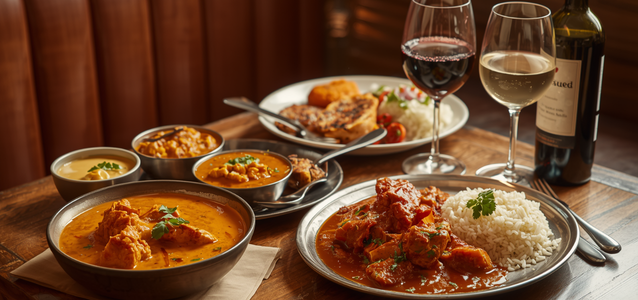
Why Indian Food and Wine Is a Thing (And Why It's Often Misunderstood)
A lot of classic wine advice was built around European food: butter, cheese, roast meats, and sauces that are rarely spiced.
Indian food operates differently. You're dealing with:
-
Layered spices that go well beyond simple heat
-
Tomato tang, coconut creaminess, charred tandoor smoke, and fragrant aromatics
-
Sauces that can be rich and mellow, or bright and fiery — sometimes in the same meal
When people say wine doesn't go with Indian food, what they usually mean is: the wrong wine doesn't work. Specifically, wines that are high in alcohol, heavy with oak, or aggressively tannic (that mouth-drying sensation in some bold reds). Paired with spice and richness, those styles can feel harsh and unbalanced.
The good news: there are plenty of wines that work beautifully, and once you understand a few basics, wine pairing for spicy food stops feeling like a mystery.
The Simple Rules That Make Pairings Work
You don't need to memorise regions or rattle off tasting notes. These four principles will get you 90% of the way there.
Rule 1: Match Intensity, Not "Colour" (Red vs White)
Indian dishes vary enormously. A creamy korma is a completely different experience from a punchy jalfrezi, and a tandoori starter doesn't call for the same wine with curry as a slow-cooked lamb dish.
Rather than defaulting to "red with meat, white with chicken," think in terms of weight and energy:
-
Light dish → lighter, fresher wine
-
Rich, creamy dish → wine with good acidity to cut through
-
Smoky or grilled dish → wine with a little structure
Rule 2: Spice Heat Needs Freshness, Not More Alcohol
If a dish is genuinely hot — madras or vindaloo territory — a high-alcohol wine can amplify that heat considerably.
What actually helps with wine pairing for spicy food:
-
Lower alcohol styles
-
A touch of residual sweetness (even just "off-dry")
-
Bright, palate-refreshing acidity
Rule 3: Creamy Dishes Love Acidity
Rich, creamy sauces — korma, butter-style curries — feel far more balanced alongside wines with lively acidity. It stops everything tasting heavy and keeps each mouthful feeling fresh.
Rule 4: Smoky and Tandoori Flavours Like a Bit of Structure
Tandoori cooking brings char, smoke, and intensity. Those flavours hold up well against:
-
Rosé with some body
-
Lighter reds with soft tannins
-
Sparkling wine — genuinely underrated here; bubbles cleanse the palate beautifully
Quick Wine Pairings for Popular Indian Dishes
These are easy, accessible options you'll find in most supermarkets or on a decent wine list. Use them as a starting point, not a strict rulebook.
Chicken Tikka Masala / Butter Chicken
Rich, mildly spiced, and often gently creamy — these are among the most forgiving dishes for pairing wine with Indian food.
Try:
-
Unoaked or lightly oaked Chardonnay
-
Pinot Gris (especially slightly off-dry)
-
Prosecco or sparkling wine for something fun and easy
Why it works: The acidity lifts the sauce, and the natural fruitiness plays well against mild spice without overwhelming it.
Korma
Fragrant, creamy, and usually low on heat — korma is a dream for white wine with Indian food.
Try:
-
Off-dry Riesling
-
Gewürztraminer (aromatic and gently exotic)
-
Chenin Blanc
Why it works: Aromatic whites mirror the dish's fragrant spicing, and a hint of sweetness smooths everything out beautifully.
Rogan Josh / Lamb Curries
Deeper, warmer, and more savoury — lamb curries want a wine with enough body to keep up, without the tannin weight that can clash with spice.
Try:
-
Pinot Noir (soft, not too extracted)
-
Garnacha / Grenache (juicy red fruit, gentle tannins)
-
Côtes du Rhône (look for approachable, smoother styles)
Why it works: You get the body the dish calls for, without the tannin overload that can make spicy food taste harsh. Choosing between curries like rogan josh and bhuna is already half the work — the wine just needs to follow.
Madras / Vindaloo (Hot Curries)
If you like serious heat, don't pair it with a big, boozy red. That's the single biggest mistake in wine pairing for spicy food.
Try:
-
Off-dry Riesling (the classic choice for heat)
-
Sparkling wine (brut or slightly off-dry)
-
Rosé with good fruit and freshness
Why it works: A touch of sweetness and bright acidity calm the fire and keep your palate feeling refreshed rather than scorched.
Jalfrezi / Bhuna (Tomato-Forward, Punchy Curries)
Brighter, tangier sauces with real definition. These want a wine that matches their energy.
Try:
-
Sauvignon Blanc (zesty and fresh)
-
Vermentino
-
Dry rosé
Why it works: Acidity in the wine mirrors the acidity in the sauce — they lift each other rather than competing.
Saag / Palak Dishes (Spinach-Based)
Earthy greens and warm spices are an unusual combination for wine with curry, but when the match works, it really works.
Try:
-
Sauvignon Blanc (herby notes complement the greens naturally)
-
Grüner Veltliner (peppery freshness)
-
Dry Riesling
Why it works: Herb-forward whites with good freshness complement the earthiness without dulling the spice.
Tandoori, Biryani, and Street Food Pairings
Tandoori Mixed Grill, Kebabs, and Tikka Starters
Smoky, charred, and packed with flavour — wine with tandoori is one of the most enjoyable matches once you know where to look.
Try:
-
Fuller-bodied rosé
-
Pinot Noir
-
Sparkling wine (grilled food and bubbles is a reliably winning combination)
Why it works: You get refreshment and enough structure to stand up to the grill.
Biryani
Aromatic, layered, and complex — biryani carries a mix of savoury depth and fragrant spicing that needs a wine capable of keeping pace without overpowering it.
Try:
-
Riesling (dry to off-dry)
-
Pinot Noir
-
Sparkling wine
Why it works: These styles have enough personality to match the aromatics without smothering the dish's subtlety.
Street-Food Style Starters (Samosas, Pakoras, Chaat-Style Flavours)
Crispy, spiced, sometimes tangy — and brilliant with sparkling wine with Indian starters.
Try:
-
Sparkling wine (always a strong choice here)
-
Sauvignon Blanc
-
Dry rosé
Why it works: Acidity — and especially bubbles — cut through fried textures and keep each bite tasting fresh.
What if I Only Drink Red?
Can I do Indian food with red wine at all? Absolutely — just lean towards lighter, fruitier styles with soft tannins. Pinot Noir and Grenache are usually far safer bets than heavy, oaky alternatives. The key is avoiding wines where tannin and alcohol amplify heat.
What should you steer clear of?
-
Very high-alcohol wines
-
Heavily tannic reds
-
Strongly oaked wines
Is sweetness the only thing that matters with heat? Not at all. Sweetness can help, but many of the best pairings work through acidity, balanced fruit, and overall freshness — not sweetness alone. Off-dry Riesling is the poster child for this: it has just enough sweetness to calm the heat, but it's the acidity that does the real work.
A Simple Pairing Cheat Sheet
-
Creamy (korma, butter-style) → Unoaked Chardonnay, Pinot Gris, off-dry Riesling
-
Hot (madras, vindaloo) → Off-dry Riesling, sparkling, fruity rosé
-
Tomato-forward (jalfrezi, bhuna) → Sauvignon Blanc, Vermentino, dry rosé
-
Smoky / tandoori → Fuller rosé, Pinot Noir, sparkling
-
Lamb curries → Pinot Noir, Grenache, smoother Rhône reds
-
Biryani → Dry Riesling, Pinot Noir, sparkling wine
-
Starters / fried bites → Sparkling wine, Sauvignon Blanc, dry rosé
Our Take: The Best Pairing Is the One You'll Actually Enjoy
Here's the thing that matters most: you don't need to find the perfect pairing. You need a comfortable, repeatable choice that makes a familiar meal feel that bit more special.
That's the whole philosophy behind wine pairing with Indian food done well — approachable, flexible, and genuinely enjoyable. No rules you have to follow, just a few principles that reliably work.
At Sariska, we keep things food-led and straightforward: proper, home-style Indian cooking with bold flavour and generous portions. Wine should feel exactly the same.
Whether you're dining in for a relaxed evening or exploring the full dinner menu for the first time, the team is always happy to suggest an easy match based on what you're ordering and how you like your spice.
Try It the Easy Way at Sariska
The best way to learn what you like is to make one small swap next time you're out — nothing complicated, just a single glass you wouldn't normally order alongside a dish you already love.
Next time you dine in, pick one dish you love and try it with a different wine style — even just by the glass. You might find a new favourite combination that makes every visit feel a little more like an occasion.
FAQ Section
Q: Does wine actually go with Indian food?
Yes — wine pairs well with Indian food when you match the right style to the dish. The key is avoiding high-tannin, high-alcohol reds with spicy curries and instead choosing wines with freshness, acidity, or a gentle touch of sweetness. Lighter whites, aromatic wines, dry rosé, and sparkling wine all work consistently well.
Q: What is the best wine to pair with a spicy curry like vindaloo or madras?
Off-dry Riesling is the classic answer — its natural acidity refreshes the palate while a hint of sweetness tempers the heat. Sparkling wine and fruity dry rosé are equally good choices. The rule is simple: avoid anything high in alcohol or heavily tannic, as both amplify spice rather than balancing it.
Q: What white wine goes best with Indian food generally?
Riesling (dry to off-dry), Sauvignon Blanc, Pinot Gris, and Gewürztraminer are all strong performers across a wide range of Indian dishes. Unoaked or lightly oaked Chardonnay also works well with creamy curries. The common thread is freshness — wines with good acidity tend to complement Indian spicing rather than compete with it.
Q: Can I drink red wine with Indian food?
Yes, with the right choice. Lighter reds with soft tannins — Pinot Noir, Grenache, and approachable Côtes du Rhône styles — work well alongside lamb curries, tandoori dishes, and more robustly flavoured mains. Avoid heavily extracted, tannic reds or anything with a very high alcohol content, as these tend to clash with spice.
Q: Where can I try Indian food and wine pairing in Alderley Edge?
Sariska Dining on London Road in Alderley Edge offers a full drinks menu alongside its Indian and Rajasthani menu. The team can suggest a wine match based on what you're ordering — just ask when you visit. You can view the dinner menu in advance or book a table directly online.